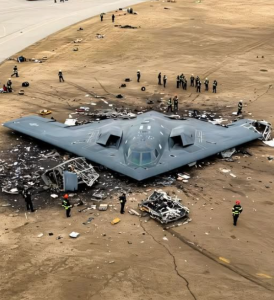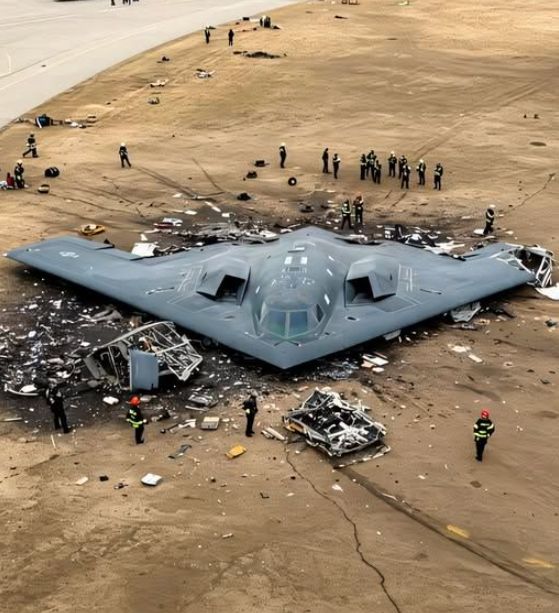
“SAD! B-2 Spirit Was Shot Down Too!” — Why This Claim Is Unverified, Highly Unlikely, and Why Experts Urge Caution
A dramatic claim has surged across social media feeds and message boards: “SAD! B-2 Spirit was shot down too!” The wording suggests a catastrophic military event involving one of the most advanced aircraft ever built—the U.S. Air Force’s B-2 Spirit stealth bomber. Understandably, the headline triggers alarm, grief, and urgent questions. But before fear turns into belief, it’s essential to slow down and examine what is actually known, what remains unconfirmed, and why specialists are warning the public not to jump to conclusions.
As of now, there is no verified, official confirmation that a B-2 Spirit has been shot down. The claim appears to be circulating without corroboration from credible authorities, and its spread highlights a familiar pattern in the digital age: sensational assertions racing ahead of facts.
Why a B-2 Shootdown Would Be Global News—Immediately
The B-2 Spirit is not just another military aircraft. It is a cornerstone of U.S. strategic capability, designed for deep-penetration missions against heavily defended targets. There are very few B-2s in existence, each costing billions of dollars, flown by elite crews, and operated under extraordinary secrecy.
If one were truly shot down, several things would almost certainly happen at once:
-
Immediate acknowledgment or denial from the U.S. Department of Defense
-
Emergency notifications to allies and international partners
-
Satellite imagery analysis flooding intelligence channels
-
Wall-to-wall coverage by major global news organizations
None of these markers have appeared in a verifiable way. Silence from official channels, especially over time, strongly suggests that the claim is either false or grossly misinterpreted.
Understanding the B-2’s Survivability
Part of why this rumor spreads so quickly is the mystique surrounding the B-2. Its stealth technology is specifically engineered to evade radar systems and air defenses. While no aircraft is truly invulnerable, shooting down a B-2 would require an extraordinary convergence of capability, timing, and intelligence.
Military analysts emphasize that even nations with advanced air-defense systems would face enormous challenges detecting, tracking, and engaging a B-2—let alone successfully downing one without triggering immediate geopolitical consequences.
This doesn’t mean the aircraft is “untouchable,” but it does mean that claims of a shootdown demand exceptionally strong evidence.
How Such Rumors Typically Start
Historically, false reports of downed advanced aircraft often originate from:
-
Misidentified explosions or crashes unrelated to military aviation
-
Out-of-context videos from past conflicts
-
Deliberate disinformation campaigns designed to sow panic or boost morale
-
Exaggeration of radar “contacts” or intercept claims without proof
In some cases, even routine training accidents involving entirely different aircraft types are distorted into viral narratives involving high-profile platforms like the B-2.
The Absence of Evidence Is Not a Cover-Up
A common response to skepticism is the idea that “they’re hiding it.” While governments do classify sensitive details, they cannot conceal the loss of a strategic bomber indefinitely, especially in an era of commercial satellites, independent analysts, and global aviation monitoring.
Moreover, the families of aircrew, allied militaries, and international intelligence agencies would all be aware long before a rumor reached social media. Large-scale military losses do not remain secret simply because officials choose silence.
Why Responsible Reporting Matters
Using language like “SAD!” paired with an unverified claim creates emotional momentum that can overwhelm reason. It encourages people to share before checking, react before confirming, and fear before understanding.
This is particularly dangerous when discussing military matters, where misinformation can:
-
Escalate public anxiety
-
Undermine trust in credible news
-
Be exploited for propaganda
-
Distract from real, verified events
Experts stress that caution is not denial—it’s responsibility.
What Would Confirm the Claim—If It Were True
If a B-2 were actually shot down, confirmation would eventually include:
-
Official statements from defense authorities
-
Acknowledgment of crew status (even if details were limited)
-
Independent verification by allied governments
-
Credible imagery or wreckage analysis
-
Consistent reporting across major international outlets
Until such evidence exists, the claim remains unsubstantiated.
The Emotional Pull of Catastrophic Headlines
Humans are wired to respond to alarming news. A single sentence suggesting the loss of a legendary aircraft taps into fear, fascination, and a sense that history is unfolding in real time. That emotional pull is precisely why misinformation spreads fastest during periods of global tension.
But history also shows that the most shocking military headlines are often the least accurate when they first appear.
The Bottom Line
At this time, there is no credible evidence that a B-2 Spirit has been shot down. The claim appears to be a viral rumor, amplified by dramatic wording and a lack of context. Until verified by authoritative sources, it should be treated with skepticism—not shared as fact.
In moments like these, restraint is not weakness. It’s the only path to truth.
If new, confirmed information emerges, it will stand on evidence—not on headlines built to provoke fear.